

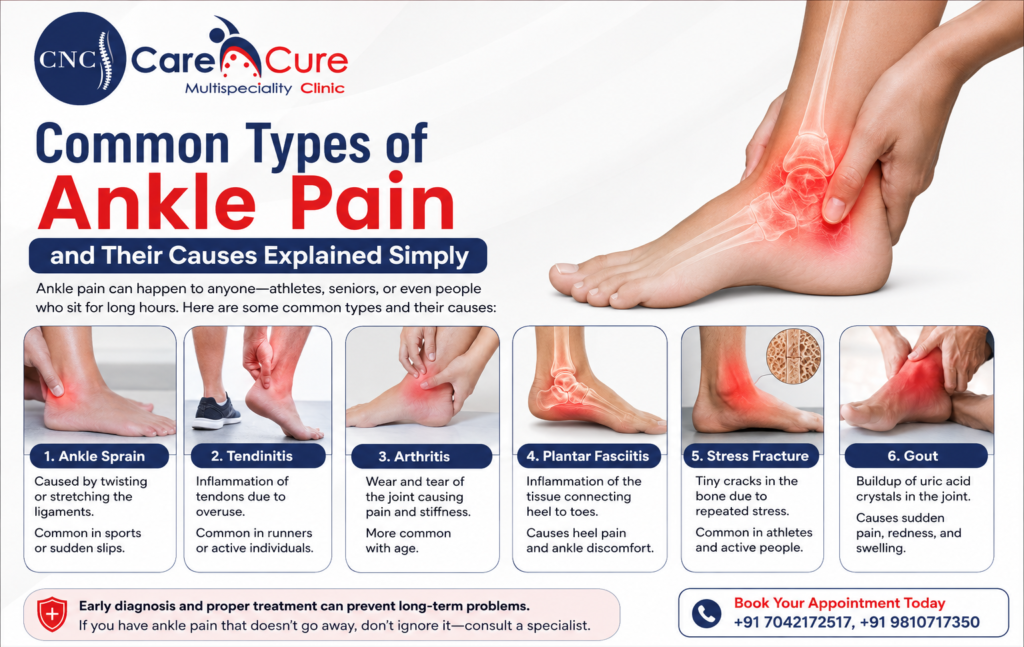
Ankle pain is more common than many people think. It has been shown in studies that nearly 19.87% of Indians deal with foot or ankle pain, with higher cases seen in older adults, women, and people involved in sports or active work.
The type of discomfort does not appear in one single form. It shows up in different ways, with different causes behind it. If you are dealing with ongoing discomfort and searching for the best treatment for chronic pain management, it can be a helpful step toward getting the right care and support.
In this blog, we will go through the common types of ankle pain, what causes them, and how they are usually managed, so you can better understand what your body is trying to tell you.
Ankle Sprain (Ligament Injury)
Ever had that moment where your foot lands the wrong way while walking or running, and your ankle just twists out of nowhere? That instant, sharp pain, followed by swelling, is an ankle sprain.
It happens when the ligaments around your ankle get stretched too far or even tear a bit because of a sudden movement or an awkward step. One small misstep is sometimes enough to trigger it.
It is common in sports, such as football, basketball, or even simple daily walking on uneven ground. You may see symptoms, such as pain, swelling, and difficulty putting weight on the foot.
Hence, for this situation, it is recommended to take rest and have control over your movement. If the pain keeps coming back, working with a sports injury rehabilitation specialist in Delhi can help rebuild strength and stability so you don’t keep repeating the same injury.
Achilles Tendonitis
Achilles tendonitis is a condition in which the tendon at the back of your ankle is irritated or develops tiny tears. It connects the calf muscle at one end and the heel bone at the other, so it causes pain during normal walking, running, or stair climbing activities.
It’s commonly seen in runners, gym-goers, or people who suddenly increase their activity. Tight calf muscles, improper footwear, and repeated painful activities are some of the common reasons behind it.
It’s better to pay attention earlier and go for gentle stretching, strengthening exercises, and a gradual return to activity to help the tendon heal and reduce stiffness over time. For better advice, it is good to take prescriptions from the best treatment for chronic pain management.
Peroneal Tendonitis (Outer Ankle Pain)
If the pain keeps coming on the outer side of your ankle, especially after a long walk or a sports session, it could be peroneal tendonitis. These tendons quietly do a big job, helping you stay balanced and control how your foot moves.
Sometimes the ankle even rolls a bit without you realising it, or the muscles around it just don’t have enough support. You’ll notice it more when you’re walking on uneven ground, wearing shoes that don’t support your foot well, or pushing yourself into activity too quickly.
So what you need to do is take some load off the ankle for a while, avoid movements that trigger pain, and slowly ease back into activity. In many cases, guided best treatment for chronic pain management also has a vital role in helping you recover and preventing the pain from coming back.
Posterior Tibial Tendon Dysfunction (Inner Ankle Pain)
Ever noticed pain or a dull ache on the inner side of your ankle, particularly while walking for long hours? Such pain refers to posterior tibial tendon dysfunction. The tendon supports the arch in your foot, so when it gets weak or irritated, your foot’s arch gets slightly dropped.
This issue shows up in people who spend long hours on their feet, wear unsupportive footwear, or have weak foot muscles. If it keeps progressing, getting guidance from a sports injury rehabilitation specialist in Delhi can help control pain and restore proper foot alignment.
Plantar Fasciitis (Heel and Ankle Connection Pain)
That sharp heel pain right when you step out of bed is a noticeable sign of plantar fasciitis. It comes from stress in the tissue under your foot, especially near the heel.
Even when you stand for more hours on hard floors, or get into a sudden increase in walking or running, it can trigger it. The pain may feel like it has been settled during the day but returns after rest or heavy activity. In that case, stretching the foot and wearing cushioned shoes can help ease pressure.
Ankle Impingement Syndrome
That blocked or pinched sensation you feel when you move your ankle upward or bend it deeply, that is Ankle Impingement Syndrome. It happens when tissues or bone edges get compressed inside the joint.
It’s common in people who squat, jump, or run in their daily routines. But because of ankle impingement syndrome, the simple movements start to feel limited, and in certain positions, you experience sharp discomfort.
To get relief from this issue, you need to rest and focus on exercises, including mobility work, to help reduce the tightness over time. However, if the pain still stays there, go search for a sports injury rehabilitation specialist in Delhi.
Post-Fracture Stiffness and Weakness (Rehabilitation Phase)
After your ankle fracture heals, you might notice your ankle feels tight, stiff, and weaker than before. That happens because it stays in one position for weeks, so the muscles and joints lose a bit of their natural movement.
Hence, when you try to walk again, even simple steps can feel slightly painful at first. You may also notice the difficulty in balancing, and the ankle doesn’t respond as smoothly as your other foot.
This is the phase where you need to start slow, with small ankle movements, gentle stretching, and light strengthening work. With time, your ankle starts to loosen up and regain control.
If you stay consistent with simple rehab exercises suggested by the sports injury rehabilitation specialist in Delhi, your ankle gradually gets back its normal movement and strength, and walking starts feeling more natural again.
To Sum Up!!
Ankle pain doesn’t come in one form. Sometimes it starts suddenly, sometimes it builds quietly over time. Each type tells you something different about stress, injury, or weakness in the joint.
If pain keeps repeating or starts affecting your daily steps, getting checked at the best treatment for chronic pain management can help you understand what’s really going on and what to do next.
FAQs
Q1. Why does ankle pain keep coming back even after rest?
A: See, you must understand this fact that you can’t fix the root issue only by resting for a while. Your muscles still may feel weak, there might be poor balance, or old injuries may still be present. If you keep overloading the same ankle, pain returns again and again.
Q2. When should you worry about ankle pain?
A: When pain persists for many days, constantly returns, and most importantly, begins to impact your ability to walk, that’s when your pain is more serious.
Q3.Is it possible for my ankle pain to recover without treatment?
A: That mild pain sometimes settles with rest, but deeper issues like tendon problems or repeated sprains don’t fully recover on their own. So, if you don’t pay much attention, they can come back during daily activity or movement.
Q4. Why does ankle pain get worse in the morning?
A: Overnight, the ankle gets enough rest, but the tissues around the ankle can get tight. That’s the reason why the very first steps in the morning can feel sharp and stiff in your ankle, while also potentially causing some other injuries.
Q5. What helps most in long-term ankle pain recovery?
A: Recovering daily habits is the most important practice to establish. This, combined with movement and strengthening to aid in the recovery of ankle injury, increases stability and confidence. If an injury persists, seeing a specialist can expedite recovery and eliminate the initial pain.

