

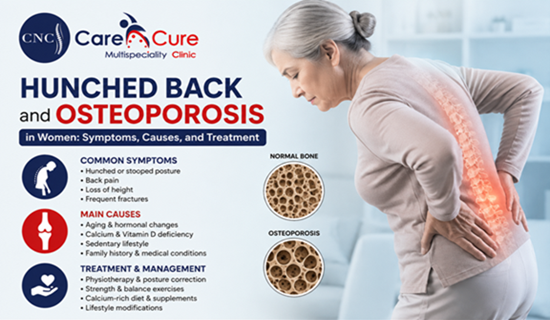
A woman’s body is unique and goes through many changes as she gets older. With age, several bone and posture-related problems can also come up, and a hunched back caused by osteoporosis is one of them. This is why many women start searching for posture correction in Krishna Nagar and other treatment options.
There are also many women who do not have much idea about what is causing their hunched back. They may try exercises or treatments that do not suit their condition.
In such situations, proper care and guidance can help them understand what their body needs and what they should avoid. So, in this blog, we’ll talk about hunched back, osteoporosis, its symptoms, causes, and treatment options.
Understanding Hunched Back and Osteoporosis in Women
Before we get into more about a hunched back and osteoporosis in women, we first need to understand what these two conditions mean and how they are connected. For women looking for posture correction in Krishna Nagar, it helps to understand the conditions first.
What Is a Hunched Back?
A hunched back means the upper part of your spine curves forward more than it should. You may notice some people’s shoulders rounding forward, their heads moving slightly ahead, or their upper backs looking more curved.
Doctors call this kyphosis. Though a small curve in your upper spine is normal and helps your body move properly, the concern starts when the curve becomes too pronounced and affects your posture, movement, or comfort.
What Is Osteoporosis?
Osteoporosis is a condition in which your bones become weaker and easier to break. You may not notice any signs in the early stages, which is why it is sometimes called a “silent” bone disease.
Women have a higher risk of osteoporosis as they age, especially after menopause. Lower levels of oestrogen after menopause can speed up bone loss.
When your bones become weak, the small bones in your spine, called vertebrae, can also become fragile. A small fall, sudden movement, or even everyday activity can sometimes cause a spinal compression fracture.
How Are Hunched Back and Osteoporosis Connected?
Osteoporosis does not automatically cause a hunched back. The connection starts when weak spinal bones develop compression fractures.
These fractures can cause the front part of a vertebra to lose height. As this happens, the spine can gradually curve forward, which can later lead to a more noticeable hunched posture, also called osteoporotic kyphosis.
Some people also consider cupping therapy at home for muscle tightness or back discomfort. Cupping does not treat osteoporosis or repair a spinal fracture. But still, you can discuss it with your doctor before trying it, particularly when you have osteoporosis, a spinal fracture, or unexplained back pain.
Signs of Osteoporosis-Related Hunched Back in Women
When something slowly starts changing in your health, your body may send small signs to alert you. It is good to spot them early to take action, arrange a check-up, and seek the right posture correction in Krishna Nagar.
● Back Pain
Back pain can appear when weakened vertebrae develop small fractures. You may notice an ache, tenderness, or sudden pain in your back.
● Curvature of the Back
A noticeable curve in your upper back can develop as the shape of your vertebrae changes. The curve may become easier to see when you stand or sit, especially as spinal compression increases.
● Hunched Posture
Your shoulders may start moving forward, and keeping your back straight may become harder. You may also notice that your head sits farther forward than before when you stand or walk.
● Loss of Height
Spinal compression fractures can reduce the height of your vertebrae, which can shorten your spine and cause you to lose some height.
● Sloping Shoulders
As the upper spine curves forward, your shoulders can start to slope downward and move toward the front. Clothes may also sit differently across your shoulders and upper back.
● Breathing Difficulty
A severe forward curve in the upper spine can reduce the space available for your lungs. This may make breathing harder, especially during physical activity.
● Stooping Posture
You may find yourself leaning forward when standing or walking. Straightening your back can become difficult or uncomfortable.
● Spontaneous Bone Fracture
Osteoporosis can make bones fragile enough to fracture during normal daily activities. A spinal fracture may happen without a major fall or accident and can cause sudden back pain or a change in posture.
Causes of Hunched Back in Women With Osteoporosis
A hunched back can happen for different reasons. In women with osteoporosis, weak bones in the spine can be one of them. It’s good if you go through the other reasons too, so you can take the right steps toward posture correction in Krishna Nagar.
● Arthritis
Arthritis can make the joints in your spine painful and stiff. You may find it harder to stand straight, and later, this can change the way you hold your back.
● Birth Defects
Some people are born with spinal bones that have an unusual shape. As they grow, these changes can affect the way the spine develops and may cause the back to curve.
● Spine Infection
An infection in the spine can damage the bones and nearby tissues. This damage can weaken the spine and, in some cases, cause the back to develop an unusual curve.
● Muscular Dystrophy
This condition causes the muscles to become weak. When the back and body muscles cannot keep you upright properly, your posture can change, and your back may start to curve.
● Neurofibromatosis
Neurofibromatosis is a condition that can affect the nerves and bones. In some people, it can also affect the spine and cause changes in its normal shape.
● Paget’s Disease
Paget’s disease affects the way your bones grow and repair themselves. When it affects the spine, the bones can become weak or misshapen and may contribute to a curved back.
● Polio
Polio can leave some muscles weak after the infection. Weak back and body muscles can make it harder to sit or stand straight, which can affect your posture.
● Poor Posture
Sitting for hours with your shoulders rounded and your head pushed forward can put more stress on your back. Poor sitting and standing habits can also encourage a hunched posture.
● Spinal Cord Injury
A spinal cord injury can affect your movement, muscle strength, or balance. These changes can make it harder to keep your body upright and may affect the position of your spine.
● Spondylolisthesis
Spondylolisthesis happens when one bone in your spine moves forward over another. This can cause back pain and stiffness and may make it harder to maintain a straight posture.
● Tuberculosis
Tuberculosis can sometimes affect the spine and damage its bones. This can cause back pain and weakness and may lead to a change in the shape of the spine.
● Tumours
A tumour in or near the spine can put pressure on the bones, nerves, or nearby tissues. Based on where it develops, it can cause pain or changes in the spine.
Treatment for Hunched Back and Osteoporosis in Women
Living with a hunched back can make simple things such as sitting, walking, getting dressed, or reaching for something harder. When osteoporosis is also present, your treatment needs to care for your bones and help you move safely.
● Osteoporosis Medicines
Your doctor may prescribe medicines to slow bone loss and reduce the chance of fractures. You may also need calcium and vitamin D to keep your bones healthy. Your doctor can tell you what is right for your bone health.
● Physiotherapy
A physiotherapist can help you move with greater safety and control. During your sessions, you’ll learn better ways to sit, stand, walk, and move without putting unnecessary strain on your back. You’ll also be given simple exercises to practice at home that strengthen your back, improve balance, and make daily activities easier.
● Posture Exercises
Good posture does not mean keeping your back stiff all day. It means learning how to hold your body in a healthier position.
Simple exercises can work on your upper back, shoulders, and core muscles. Women looking for posture correction in Krishna Nagar can speak with a trained therapist to learn exercises suited to their needs.
● Managing Back Pain
Back pain can make you want to stay in bed all day. Short periods of rest may help during painful episodes, but safe movement is also important for keeping your muscles active.
Your doctor can suggest safe pain-relief options based on your symptoms and bone health. Some women are recommended cupping therapy at home for tight or sore back muscles.
Get Your Back Checked. Book a Session With Care n Cure Today
Not sure why your back is becoming more curved or painful? Don’t keep trying random exercises at home.
Get your posture, movement, and back strength properly assessed by a physiotherapist at Care n Cure. Book your physiotherapy session today and get guidance suited to your needs.
You can also call Care n Cure to schedule a home visit appointment or speak with our team about your concerns and find the right care for your back.
Frequently Asked Questions
Q1. What exercises are safe for osteoporosis in the back?
A: Gentle exercises that work on your back, legs, balance, and posture can help. Walking and therapist-guided strengthening exercises may also be useful. If you have osteoporosis or a spinal fracture, talk to a physiotherapist before starting new exercises.
Q2. At what age are women more likely to develop osteoporosis?
A: The risk of osteoporosis increases as women get older, especially after menopause. The drop in oestrogen can speed up bone loss. Your risk can also be higher if you have a family history, low body weight, or other bone-related concerns.
Q3. Can men get osteoporosis too?
A: Yes, men can get osteoporosis too. The risk tends to increase with age. Certain medicines, health conditions, low testosterone, smoking, and low calcium or vitamin D can also affect bone strength. Men can also develop spinal fractures from weak bones.
Q4. Can osteoporosis cause a hunched back?
A: Yes, it can. Osteoporosis weakens the bones in your spine, which can develop small compression fractures. These changes can make your upper back curve forward, and that causes a hunched posture. If you notice your back becoming more curved, it’s worth getting it checked.
Q5. Can physiotherapy help with an osteoporosis-related hunched back?
A: Yes, physiotherapy can help you move better and keep your back and body stronger. Your physiotherapist can teach you safe exercises, improve your balance, and work on your posture. If you have osteoporosis or a spinal fracture, your exercises should be planned for your condition.

